Mapping, Making and Machine Learning: DH Winter School 2026
The Digital Humanities Winter School, a unique initiative by the Department of Humanities and Social Sciences, Indian Institute of Technology Delhi (IIT Delhi), was held in February 2025. Its primary goal was to bridge the gap for scholars and students from the humanities, social sciences, and other non-STEM disciplines in India, providing them with a hands-on introduction to computational tools and digital scholarship methods. This introduction aimed to foster algorithmic thinking, conceptualize data-centric research projects, encourage collaborative ventures, and instill critical approaches toward algorithms. The DH Winter School, with its promise of a low learning curve, was designed to boost the confidence of participants who came with little or no exposure to digital applications or programming. By addressing the limited opportunities for students of the humanities and social sciences in India to learn these methods, the DH Winter School aimed to impact the academic landscape significantly.
Online Bootcamp
Before the in-person sessions, participants completed an online bootcamp in Python and R. It covered variables, data structures, loops, functions, regular expressions, and visualisation. This preparatory stage helped participants begin the winter school with a shared foundation.
Spatial Analysis
The in-person programme opened with sessions on spatial thinking in the humanities and spatial data structures. David Joseph Wrisley led the spatial humanities strand, which included close spatial reading in Recogito, georeferencing, web mapping with qgis2web, and a critical comparison of GeoNames India and OSM India. Rajarshi Dasgupta led the GIS strand, with QGIS basics, vector analysis, datum and georeferencing, and satellite imagery in real-world contexts. Vinayak Dasgupta’s session, “Letters, geomaps, networks,” drew connections between archival correspondence, spatial imagination, and networked ways of reading historical material.
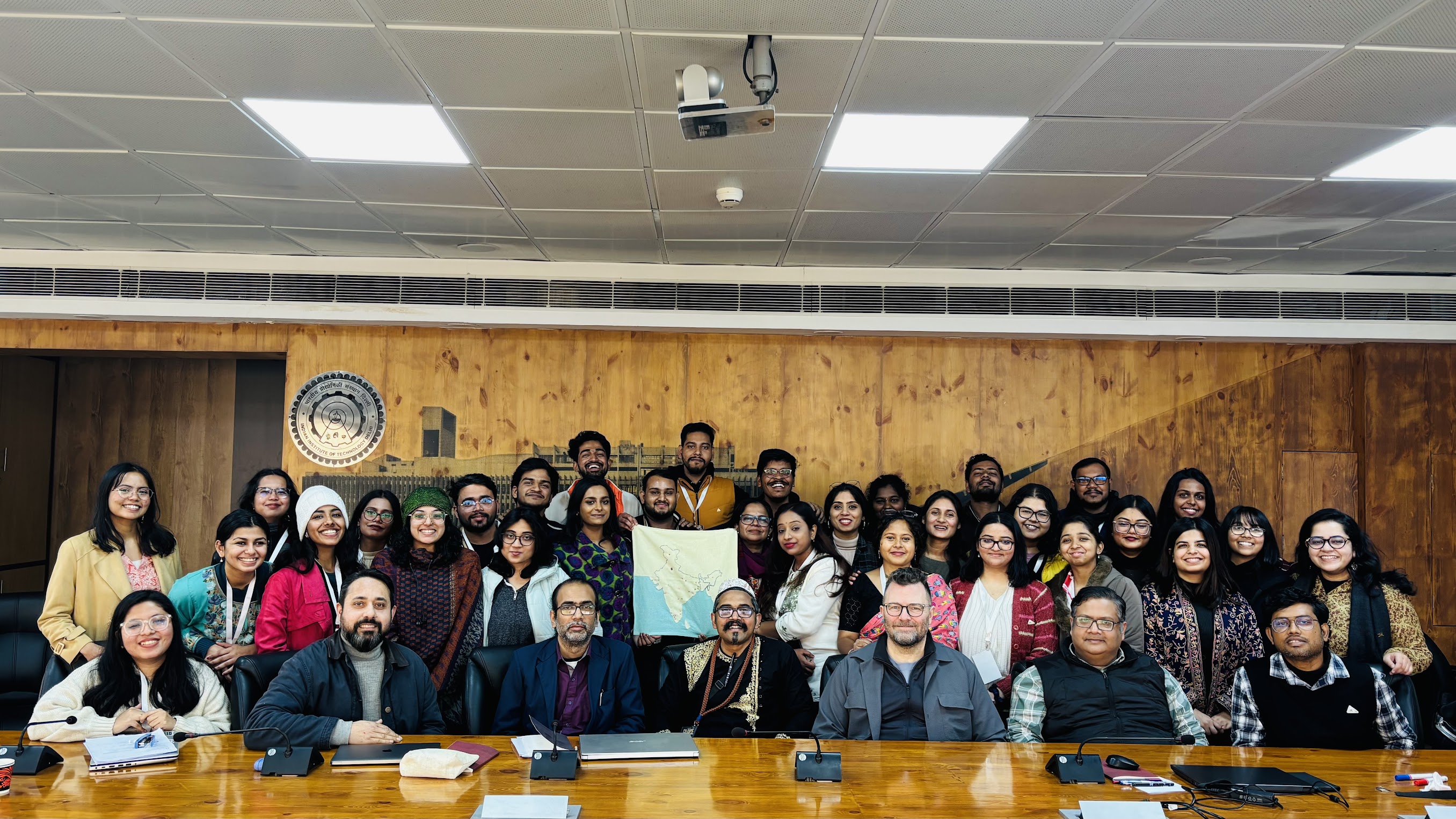
A public lecture by David Wrisley, added an important conceptual frame to the week. Titled “Not Only a Trend: Why Digital Humanities Matter in an Era of Intensifying Technological Change,” it argued that digital humanities is vital to humanistic critique in a time of rapid algorithmic change.
Machine Learning
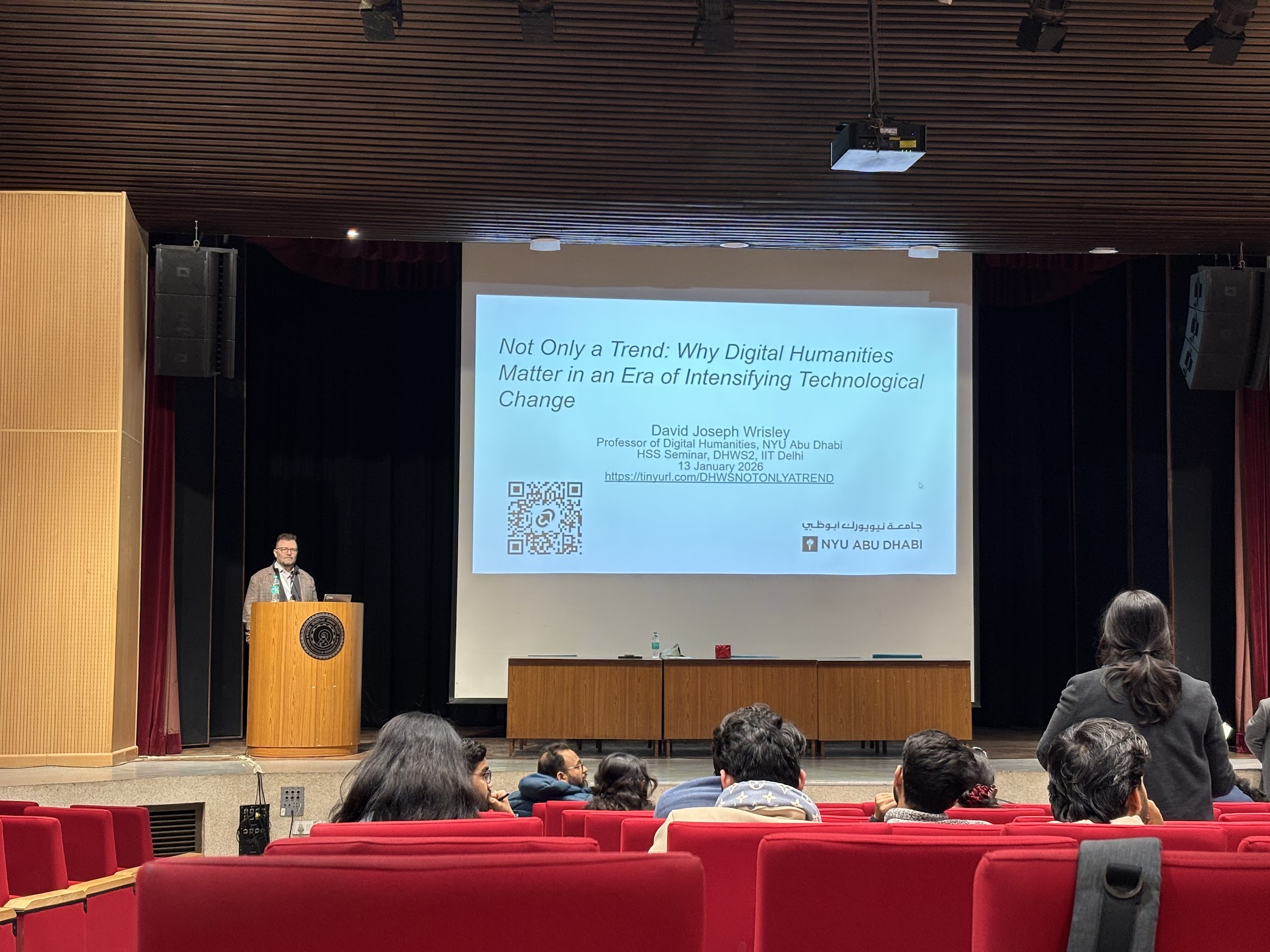
Machine learning and network analysis formed another key part of the programme. Sudeep Narayan Banerjee’s sessions introduced these topics in a way that linked technical practice to research questions in the humanities. The winter school also included assignments that helped participants consolidate what they had learned.
Evening at the museum
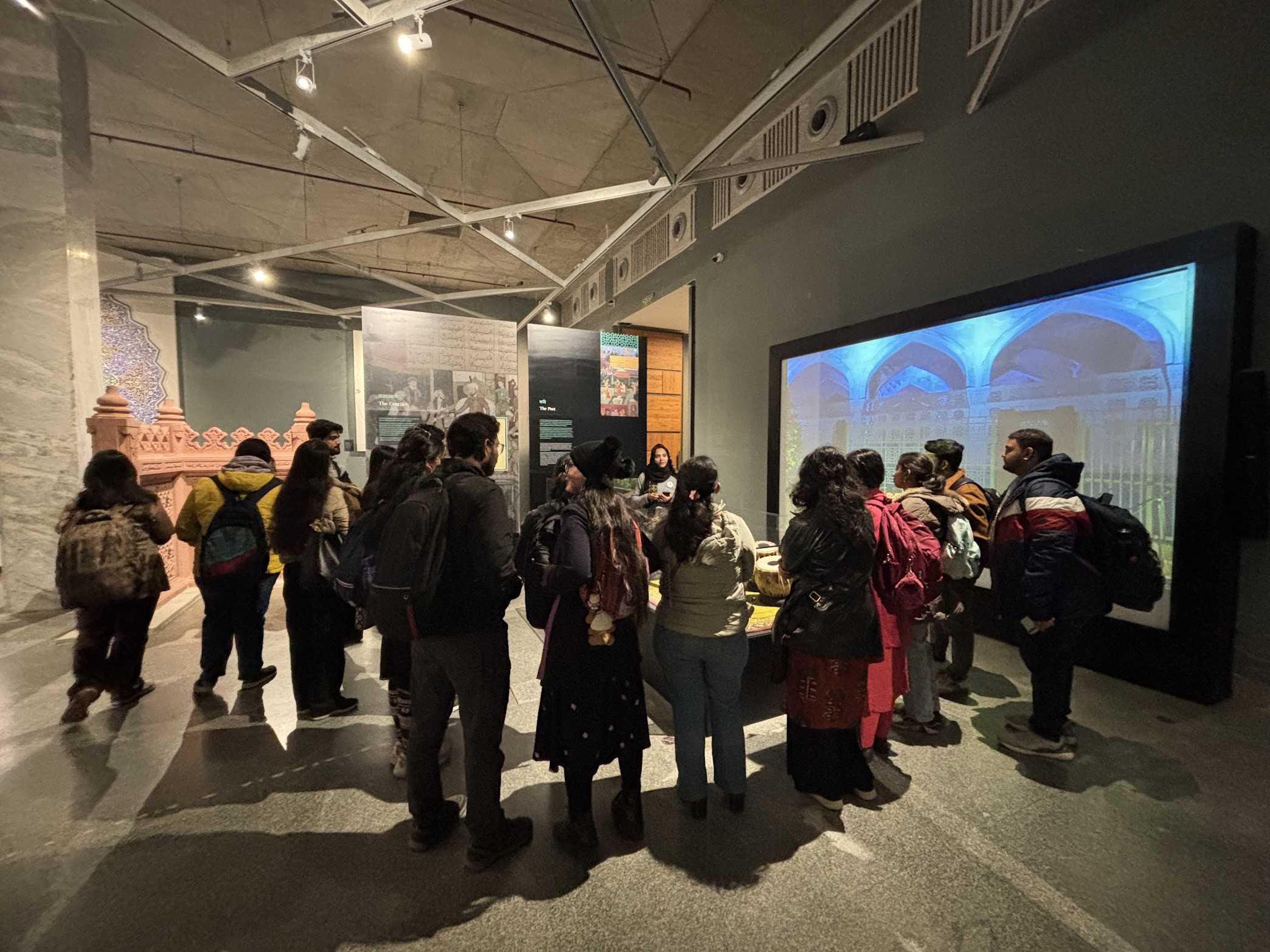
The programme also made room for learning outside the classroom. Participants visited the Humayun’s Tomb Museum, which extended the winter school’s focus on space, archives, and heritage into a public setting.
Critical Making
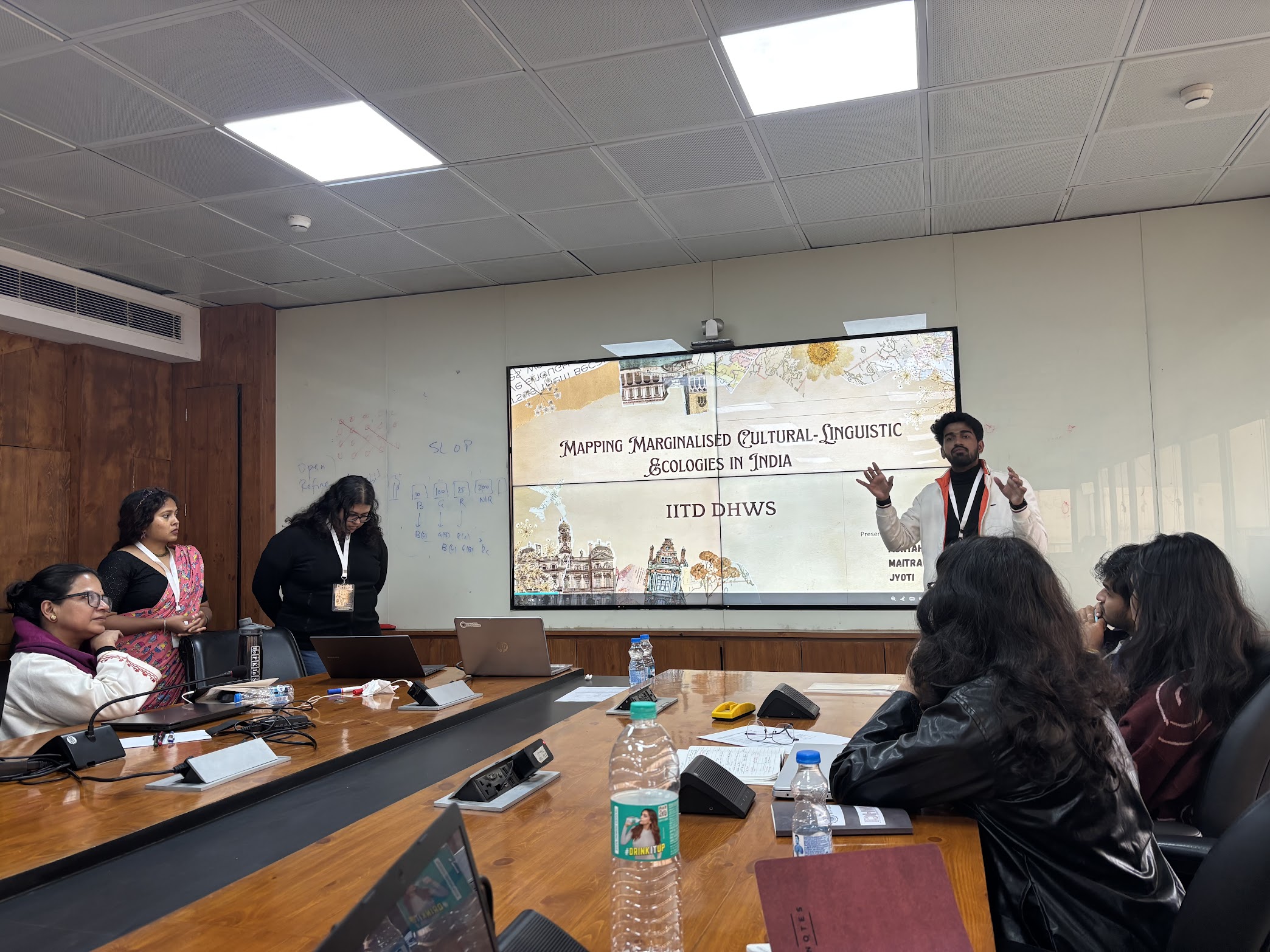
The week ended with participant presentations and a valedictory session. These final presentations gave participants a chance to share ideas, reflect on the tools they had used, and connect their work to wider digital humanities questions.
One of the most memorable collaborative activities was a cross-stitch map of India, in which participants marked the places they had travelled from to attend DHWS2. The result was both a visual record of the cohort’s geographic diversity and a material expression of the winter school’s spatial humanities theme.
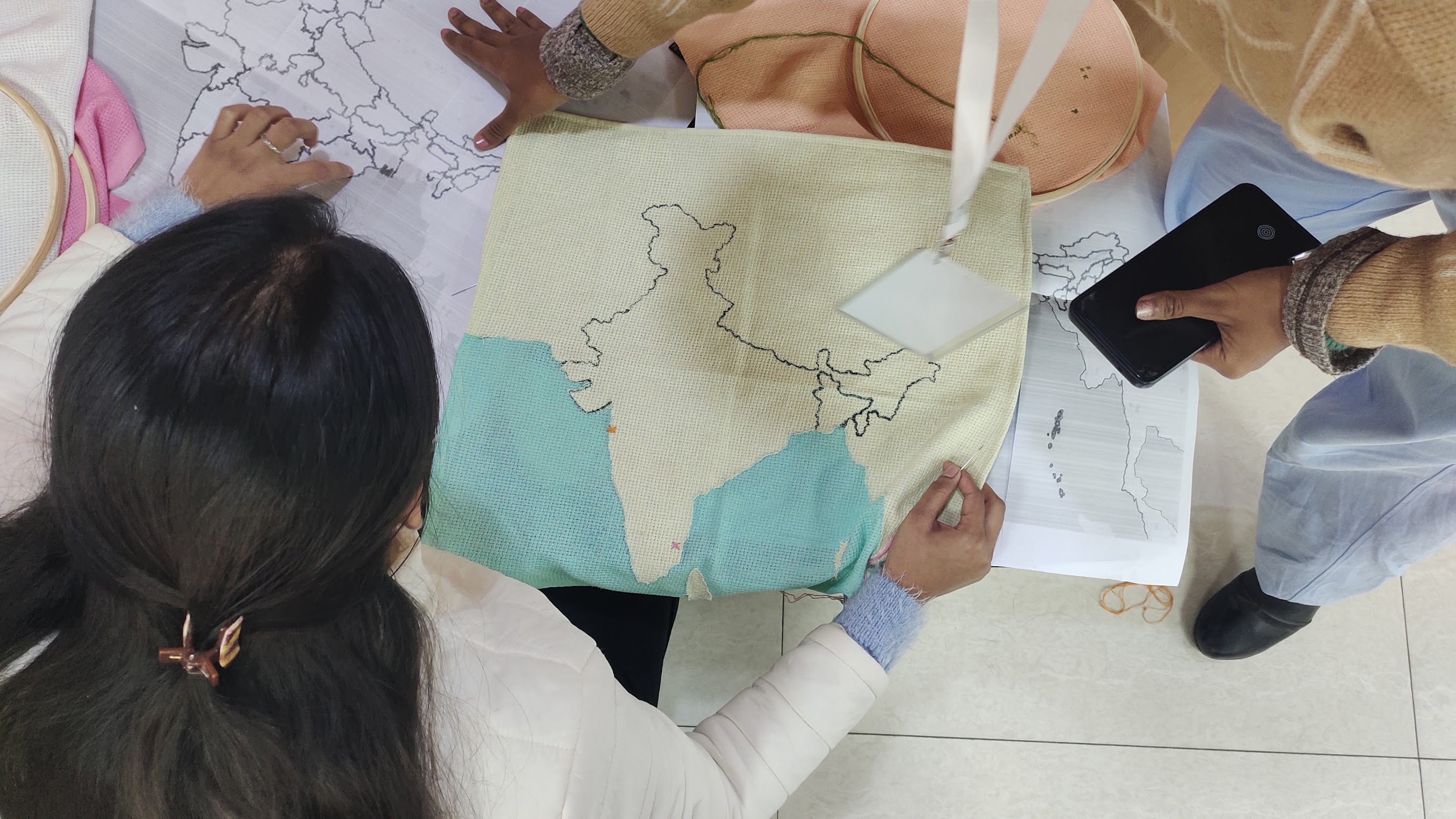
DHWS2 built on the first winter school while expanding its reach and range. By combining an accessible bootcamp, focused modules, a public lecture, an excursion, and participant-led sharing, it strengthened the winter school as a space for experimentation, collaboration, and interdisciplinary learning.
The Digital Humanities Winter School 2026 was made possible through the generous support of our sponsors, Hewlett Packard Enterprise (HPE) and Savex Technologies. Their partnership enabled us to expand access to training in spatial and network approaches within the humanities and social sciences, while also introducing participants to emerging AI and ML techniques.
Participant Feedback
The impact of the DH Winter School is best captured through the voices of its participants:
“At the time of filling the application, I think I was a bit too idealistic in my approach towards geospatial and network analysis, as also towards DH in general. The hands-on approach of the workshop made me realise how messy data (especially humanities data) can be, it taught me that using DH tools can be equally messy too, that there’s a huge difference between reading up on a particular DH methodology and actually getting your hands dirty trying to complete it successfully. So yeah, the workshop certainly molded a much more pragmatic person of me, making me realise the importance of setting realistic goals when it comes to the process of learning and not biting off more than I can chew.”
- Darshyata Deka
“At the time of application,My primary goal was to hone my skills in QGIS to enable myself in marking of the sites for more visual appeal during presentation.The workshop has provided me not just the knowledge of what I wished for but also opened new doors and showed me different scopes in Digital humanities.”
- Arya OM
“I have experienced a transformative shift from traditional to computational approaches in my research. When I applied to the DH Winter School, my goals were grounded in conventional methodologies in the historical and medical humanities. This included close reading of Bengali and English biographical texts, archival research on colonial psychiatry, and qualitative analysis of medical narratives. However, my immersion in programming languages like R and Python, along with tools like QGIS and Recogito, fundamentally changed not only my methods but also my understanding of what historical inquiry can achieve. … Learning R and Python allowed me to conduct computational text analysis on 19th-century Bengali texts, revealing patterns that traditional reading could not uncover. … The winter school fundamentally changed my goals from producing traditional monographs to creating multidimensional digital scholarships. This includes developing interactive databases, GIS story maps, computational text analyses, and virtual reality reconstructions that make historical knowledge accessible and engaging in new ways”
- Debjani Das
“My initial goal was to understand the data collected for the current project I am working in, which is related to Odisha’s rock art heritage. Although things data analysis can be done in ms-excel, new dimensions like network analysis, visualization of the data using python and that too on an interactive map, and using GIS data more efficiently are the key takeaways I’m taking in with myself after having such an enriching experience. Apart from that, learning how DH tools like recogito can be helpful in analysing literature also gave me an impetus on how this can be implemented in analysing and understanding the Vedic corpus in a better way, where similar words written in Sanskrit can carry diverse meaning, depending on the context. “
- Sanket Kumar Mahana